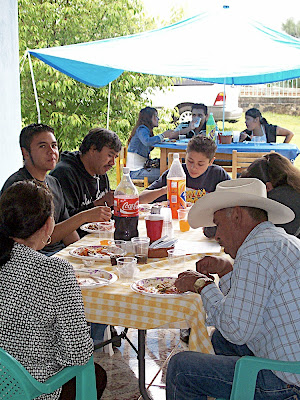
Wednesday, June 17, 2009

Tres Años a la Hacienda

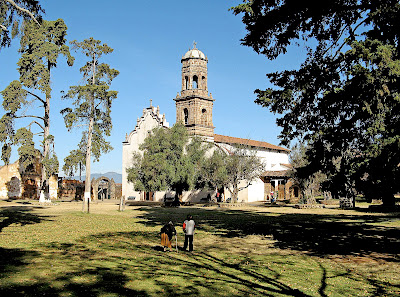
                   Photo courtesy of Geni Certain

   (This began as a comment to Felipe, on his blog, The Zapata Tales, and his post, "The Smells of Mexico".)
For me, nothing beats stepping outside the front door in the early morning to turn up the heat on the hot water heater, and inhaling that scent  of new mown hay and the sweet smell of recently born calves.
(Calves are so cute when young, then they grow up to be large, bespattered, klunky kows and pendulous toros.)
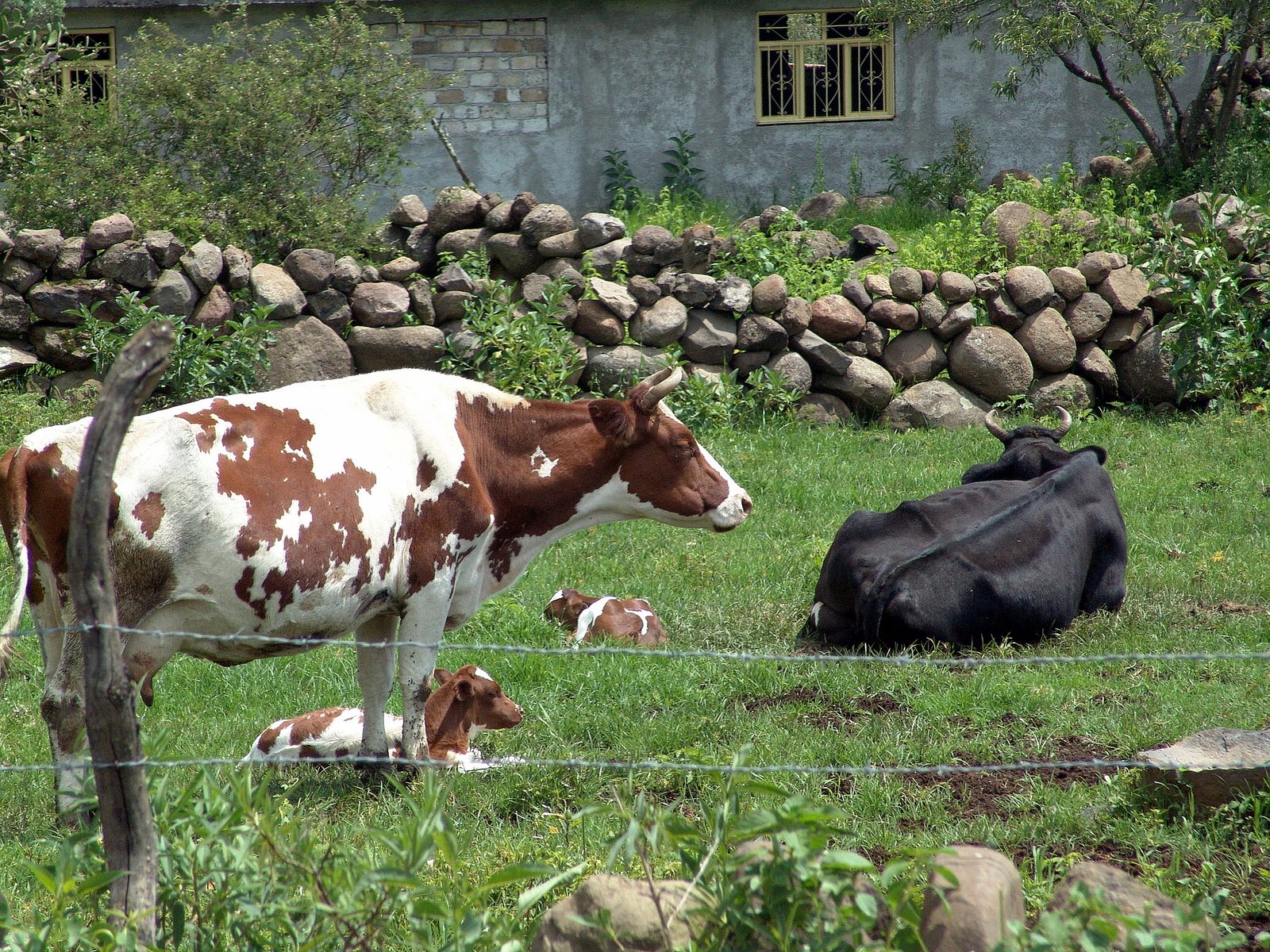
                    
                    Photo courtesy of Geni Certain
                  
But, after being out here at the Hacienda nearly 3 years, I don't mind the wet cow plop on the streets and roads. After all, it's 100% organic.
I'm not so keen on the canine road pudding about a kilometer on out toward the crossoads. But, on the other hand, the horse mummy along the base of the big hill on the way to Tzurumútaro is now curing nicely. The smell is hardly noticeable as we drive by.
As the dawn comes, the many birds began their varied musical choruses.
At la Casa Hacienda Cuevas, there is much baking, adding its aromas to the mix. However, my baking schedule is not as regular as that of Felipe's Guapa Señora, who bakes pastries to sell every Saturday under the portales of  La Plaza Grande.
What more could I want? A warm Danish pastry? I already have that before me with a mug of café de Chiapas.
Now, I want to toast the memory of Mel O'Hara, who died 3 years ago in his casita just over the way from our house. It was he that kindly lead us to our new home place. We liked the place right away, but now we love it.
Here's to Mel! I lift my coffee mug to his memory.

Tuesday, June 09, 2009

A Magic Utility Belt


Sometimes, fantasies come true.

When I was a little kid in Brooklyn, NY of the late 1940's
, I was given a belt, studded with fake "jewels" made of colored glass. In my imagination, they were control buttons that could invoke super powers. A touch of a green jewel, and I could melt into lithe thinness, and slide through the most densely crowded streets.

A touch of the red button would send me soaring at high speed, lightfooted, over the "EL" station stairs , on my way to buy hot dogs for our supper at the garlic fragrant corner deli.

Who could have imagined, that some 60 years later, it's possible, with a few keystrokes, to fly, perspectives constantly shifting, zooming and rotating at will; either from the mountains of Madrid or from the coast of Barcelona, para ver las calles in Street View photographs, then quickly jump to a specific address in San José, CA (Google Earth).

I can locate pizza places in Manchester, CT, or fish 'n chips shops in Manchester, England, complete with reviews and driving directions. Chiropractors in Cairo. (Google Maps); and visit places of color and wonder undreamt of in those earlier generations. I just spent a few minutes looking at my childhood neigborhoods to see what has change (much) and what has not. Google now has refined its maps and Street View once again. Check it out.


Later, as a teenager, I enjoyed spending many Saturdays at the New Haven, CT Public Library, getting books from the stacks on topics such as pyrotechnics and speleology.

Now, a vast and seemingly limitless worldwide library is open to me, both at home and when I'm away. I don't have to look in the card catalog, write out call slips, and hand them to the librarian, who'd give me suspicious looks, and wait very long for the desired info.


Back then, as a young kid, I was also enamored of a special sort of scrapbook/coloring book, which involved making waxed paper transfers of the color comics and such, then scrapbooking it. (Obviously, a dim memory.) Those were my multimedia tools of that era.

Now, after having learned some basic, then more advanced computer skills over the last 15 years, and with the help of tools such as Blogger, I can build a journal of my view of reality (and fantasy). Instead of waxed paper and a flat stick for image transfers, we have Copy, Cut and Paste, as well as Save and Save As.


Best of all, many of these powerful commands are accessible by keyboard shortcuts. I love keyboard shortcuts. Mousing is o.k. at times, but the speed and ease of keyboard navigation is unsurpassed.
(I can make this entire page vanish with the touch of two keys. I can change sites with a few keystrokes.)

My newest Magic Utility Belt is a MacBook Pro laptop. Although its powers are far beyond any childhood dreams, it still could be more portable. An iPhone or iPod Touch, with their amazing apps, accessed by touch screens, come a lot closer. But, ultimately, what I want is a belt in which a touch of a colored jewel or a combination, invokes a heads up, holographic display, and flys me to where I want to go. Meanwhile, I have posted these graphic examples of some other magic utility belts for your entertainment.


Monday, May 25, 2009

Regreso al Nido


We returned to Michoacan last Thursday, after a three week visit to the home of my parents and sister in New Jersey. It might be called a return to the nest, but, truthfully, it wasn't. I had never lived in that house, other than during our annual visits.

This visit was difficult at times. My parents are aging and my father is not well.

I'd left the nest in the 60's, when I went off to a rather irregular college experience. I'd always been the independence seeking one. What could be more independent than to later retire to a small ranching pueblo near Pátzcuaro, Michoacán?

Our Continental Express jet banked over a corner of Morelia, then homed in on the airport, located in the green, rain-refreshed valley northeast of of the city. From the window I glimpsed the broad expanse of Lago Cuitzeo, shining in the late afternoon sun, just over the ridges to the north.

We landed, and after a brief passage through Migracíon and Aduana, we were greeted by Nacho, our driver.
After loading the trunk with with our luggage, we rode off into the glorious sunset. I was animated and energized, until fatigue eventually set in on the hour and a half drive home.

A couple of days later I was cleaning the porch. Long, thin twigs littered the floor.

The mystery was solved when I went to move the barrel grill. There, on the utility shelf of the grill was an abandoned swallows' nest, under the shelter of the tarp. The only evidence of occupancy was a few wispy feathers.

Tuesday, April 14, 2009

FAQ: How to get from MEX Airport To Patzcuaro

Over the last few years, I've received more than a few emails asking me how to best get from the Mexico City Airport by bus to Pátzcuaro. While I recognize that there are several ways to accomplish this, with the help of our friend, Big Tex, I have distilled the vital information down to to give the simplest, most hassle free way possible. This applies to travel in the daytime and early nighttime hours. We try not to take buses at night; it's just our personal preference, unrelated to any other issues.

This is a Public Service Announcement, brought to you by Don Cuevas, so don't give me any static. Like, you've heard that the Metro is cheap and fast. So? Go to some other website if you want to get fxxxed up in the Metro, not here.


At the Mexico City Airport, after passing Aduana and Migracíon, be sure to buy your taxi ticket at the official taquilla, or sales window, for example, Sitio 300, not from some tout. This is very important! The fares are calculated by zones. There are regular taxis, which are fine for most people's needs, and they are much cheaper than the large expensive Suburbans. Pay attention to which service you are buying. Once you pay for your taxi ticket at the window, you do not pay the taxi driver anything more, except for a very optional tip, if you had a lot of luggage, or his conversation was especial cool, whatever.

Once at Terminal Poniente, also called Terminal Observatorio, go to the AutoVias ticket counter. There are at least 3 desks, close by each other. It may take a moment to figure out which is the one needed. read the "Salidas" or Departures board. Credit cards are accepted for payment. If paying with cash, check your change. Get a bus direct (Sin Escalas) to Patzcuaro. While it does stop 15 minutes in Morelia, you stay on and do not change buses. Escalas are changes from one bus to anoher. No need, if you follow the easy directions here.

(Certainly, it's easier than taking ETN to Morelia, changing to a Patzcuaro bus once at Morelia for which a change of building is probably necessary as well.) It has to be faster to get an AutoVias bus, with more frequent departures, than the ETN. Though the AutoVias buses are one level down in luxury than ETN, they are quite comfortable. AutoVias has a separate waiting room, with free restrooms and free coffee. They will also check in your larger luggage while you are still at or near the ticket counter. The buses are equipped with passable restrooms. The movies are generally awful.

You get a crappy "ham" and cheese sandwich and a soft drink when boarding. I recommend Boing! a natural fruit drink. You can also buy decent baguette, croissant, or torta sandwiches or pan dulce at Terminal Poniente's restaurant or snack bar, inside. I avoid the outside stands and the inside carnitas places. The main restaurant does a decent breakfast. There's an internet place or two, which are sometimes open and sometimes functioning.

One drawback of AutoVias is that you can't yet book on line.
WAIT! You can now book on line, as long as your trip isn't very far in the future. Go to Grupo HP-Occidente , and fill out the forms and press the digital buttons, as requested. But it should be no problem getting a seat during normal, daytime non-holiday conditions, walking up to the counter and paying for the next available departure.

By the way, anyone who willingly books a seat at the rear of the bus, near the toilets, deserves the experience.

The trip takes 5 hours, more or less. If you follow my directions, hard-earned through personal experience, you will be all right. Once arrived at the Central de Autobuses de Pátzcuaro, you can get a cab, take a combi van if you know what you're doing, or even walk to Centro, if your luggage is light and it's still daylight. But I don't want to explain the last one. My work here is done.
¡Adios, muchachos!


Sunday, April 12, 2009

Piso Superior

We are always looking for a better baño when out and about. It used to be that a well maintained sanitario was often hard to find. In that situation, it was often a matter of "breathe through your mouth and squint your eyes." Now, after many years, things have improved.

Click photo to enlarge.

Quiroga was thronged with Easter Saturday visitors, we among them.
We'd been rooting through a medio kilo of well-salted carnitas and washing them down with muchos refrescos and bottled water at the Plaza. The moment came soon enough when we needed a baño pronto. It was best to seek relief there in thoroughly modern Quiroga before setting out for Tzintzuntzan, where the options might be somewhat marginal.

We finished up our nieves at La Michoacana, and walked back a half block to a set of sanitarios set behind a serious double revolving cage door. There was a coin slot for a 2 peso fee and a young woman handing out carefully folded papel higíenico. At that point, our roads forked according to sex. Women to the left, entering on the ground floor. Men had to achieve relief by first ascending a hallway with a steep, concrete paved ramp, inclined at about 30º, to the mingatorías* and excusados* some 10 or more meters up to the piso superior. Handrails and treads cut into the concrete ramp were provided for our safety.

The upper deck was highly functional, (except for the first 3 booths, which were afuera de servicio), attractive and well maintained. At the street side were stained glass windows. I didn't take time to explore in detail, but did my business and then, oh-so-discreetly, took a picture of the ramp.

This was indeed a superior pipí experience up on the piso superior.
I recommend it to visitors. Men should have strong legs.


*Basic bathroom terminology. Another free, educational feature of my blog.

"Sanitario" is a nice term, "excusado" is the porcelain throne itself. "Mingatoria" is a less-seen term for a urinal. Not so polite.

"No pise al pasto", on the other hand, is a sign to "keep off the
grass."

Tuesday, April 07, 2009

What goes around, comes around


Morelia's eastern and northeastern areas are less familiar to us than the southern and southwestern areas where we normally shop.
"The city is the biggest in the state, and the population of the conurbated area was 642,319 people (608,049 in the city of Morelia), according to the census of 2005..."
(wikipedia.org)

We know how to get to the Airport by the western peripheral highway, past the Bus Station, or up the more direct but often traffic clogged Calzada La Huerta-Héroes de Nocupetaro-Avenida Morelos Norte.

We left the MLM Airport yesterday morning, and with hopes for a simpler route, took the new toll road "Short cut" east of the city. It which turned out to be not so short. It debouched (no, not debauched) us into a major construction zone, where a huge trench, The Excavation From Hell, lay at the key city street intersection to where we'd really wanted to go. At that point my mental GPS crashed, and after at least one fruitless loop, we ended up taking an unplanned serial circuit back around the north side of the city. Fortunately, the traffic wasn't too bad once we emerged from the construction zone.
(General Confusion Fault Zone on this zoomable, draggable map.)

This meant that we had to skip the breakfast at Bisquets Obregón (not a major disappointment), and at it also seemed our shopping at Costco was doomed.

(enter sheepish pun area)
But what goes around, comes around, and nowhere does it apply better than to peripheral highways. We completed about two-thirds of the giant loop of the north side, and eventually found a parking spot near "Barbacoa de Borrego José Luis", about a 1/2 mile from Costco. The specialty there (and not much more than this) is pit-steamed mutton, wrapped in pencas de maguey (leaves of the agave plant), cooked for hours, until the meat is fork-less tender and a delicious consomé is produced. You can make your own tacos with the fresh, hot tortillas they bring you, or put the meat in the bowl of consomé, or order "montalayo", which we didn't, a sort of Mexican "haggis" of spiced, chopped sheeps's innards, usually eaten as tacos. All parts of the sheep are put to ewes. It's really delicious, if you're innardly oriented.
(exit sheepish
pun area)

From Costco, well-known territory for us, it was no big deal to get home. Our route had been lengthy, but at least we hadn't looped back to the Airport.

I posted our plight on the Michoacan_Net Yahoo Group, and got advice from a poster who often uses the short cut road. But I've yet to unravel his advice, because he knows where he's coming from and where he's going, so his easy reference to places unfamiliar to me does. not. compute.

Friday, March 06, 2009

The Birds Is Coming!

This morning, as I was sleepily spooning in my rice and beans, Doña Cuevas exclaimed that the crows were swarming. This was a change from the white cattle egrets that beautify the area. Unfortunately, the egrets are on vacation just now, probably dipping in the tepid waters of Lake Cuitzeo or somewhere fishy. When I got up from the table, I took a look.


It was reminiscient of M.C. Escher drawings.

I then grabbed my camera and took a few photos. A closer looked revealed that they weren't crows, their color was brown on back but some had yellow breasts.

I was pleased that they stayed outside, wheeling and squealing. A confused and thrashing bird indoors is one of the creepiest things I know.

I didn't sight a Tippie Hedren among them.

Tuesday, February 24, 2009

A Shift of Wind

When we returned yesterday from a fast trip to Morelia, I saw that the tarp that covers the Kingsford Barrel Charcoal Grill had blown off. We keep the grill under the protection of our front "porch", yet a shift of wind had removed it. Susan said it was the March winds come early.

Photo of paper mill air pollution.

Marzo es un mes de vientos fuertes e impulsivos. The neighbors' metal gates slam and clatter in the whims of the wind. If we're not careful to put the in door stops, our doors slam shut with an alarming bang. Almost all of our doors are wood, so they are quiter, but even if they were metal, I believe the gusts of wind could slam them.

A couple of years ago, we lay sleepless during siesta time, listening to the moans and screeches of the wind whistling through the vacant houses up the street.

This morning I awoke to a whiff of a different smell than our accustomed muted aromas of farm animals and the rare musky, funky odor of a skunk. It was the distinctive stink of the paper mill below the hill descending to the valley of Morelia. This was a sure sign that the prevailing winds had shifted fom west to east. Nature, playing ping-pong with the winds, had surmounted the hill and delivered us an unsolicited ream of
chemical pong.

There's a beautiful new factory, the "Fábrica de Jabón", on the Morelia-Pátzcuaro highway, in the final stages of construction. It is closer to us than the paper mill. It remains to be smelled whether it will waft sweet aromas or render the stink of rancid fats.


Monday, February 16, 2009

Green and Bear It


It's only the middle of February, yet Spring is awakening in Las Cuevas.

(The following is not a complaint, mind you, but a description of an event. May no one take a fence.)

Last week, our landlords brought over an air compressor and a spray gun. Their youngest son then proceeded to paint our scruffy, pointy fence. Over two days, he painted the fence, some of the concrete base, the brick columns, some patches of grass (which, dry as it's been, needed some refreshment of color).

He also managed to paint himself in the back flow of spray. We sincerely hope that his health isn't impaired.

We are grateful. I hardly notice the stray spray. I'd been hoping for some time that they'd paint the fence. This came as a gift.

I just got back from a late morning walk. I saw the rancheros/campesinos fertilizing the plowed milpas, one costal at a time. There's no shortage of organic fertilizer here. We are in Cow Country.

Nearby, a grassy field is already bright green. The plant growth may be zacate, here, a tangle of low lying, vinous stuff used to feed cattle. Innuendo and out the other.
Serious planting of corn is still ahead. The seed must be in the ground just barely ahead of the June rains.

It's the never ending cycle of life in el campo.

Monday, January 12, 2009

Life's a Beach

I am not a lover of beaches. They bore me. Yes, they are pretty good places to go for mariscos dinners. But they have sand, which is often scorchingly hot, and the damn stuff clings to you on your feet, legs and other unwanted places.
See this photo? Admit it, it's incredibly boring after a few moments of fond gazing.

Coconuts could fall from high up in the palms, injuring you to the point of becoming a total vegetable, finishing off the job of dulling your faculties; or even, dead. Agua de cocos is a highly overrated drink, with a wishy-washy taste of soap, and the concept of ¡Cocos Fríos! is highly relativistic.

Beaches often have mosquitos. Some have jejenes as well. Jejenes can make evening strolls along the beach (while having meaningful conversations with your loved one) into a Jell.

Hammocks are bad for the spine. They are also hazardous in terms of flipping out, especially when hung over concrete floors. It's no wonder that the Mayan civilization declined, with hammocks in which to make whoopee. (There were some other aspects, involving perforations with sharp spines, but I'll skip over that.)

Do I have to mention sunburn? O.k., I will.

The last time we stayed at a beach was in February, 2007. We stayed at Quinta d' Liz, run by Luis, a very nice guy, with two charming and sexy assistants of the female sex. I will admit, it was nice to have my morning coffee, toast
and jam served by the cute, mildly flirtatious helpers in their swimwear.

After that highlight, the day went downhill quickly, as the sun rose higher and began its inexorable burn of pale güero skins. By 11:00 a.m., the sand was too hot to to walk across in bare feet, unless you'd studied firewalking while with the Peace Corps.

Most of the day we spent under the shade of a palapa, or in our humble hut. Fortunately, there was a powerful fan. If that didn't cool us off, we could go water ourselves under the unheated chorro de agua coming out of the shower. That felt pretty good. I think it was seawater.

One day, Susan and I drove over to Ixtapa (a development of modern, air conditioned high-rise hotels, featuring all amenities, scorned as "Plastic!" by true Mexico travelers seeking The Real Mexico Experience), to which I longingly gazed upward, thinking of air conditioning, a swimming pool, room service, swim-up bars and especially freedom from nightly enshroudment in mosquito netting. Alas! We were only there to visit the U.S. Consular Representative for paperwork, not dally in luxury. No Carlos 'n Charlies' for us.

Back at Troncones, I futilely sought luxury. I made the mistake of signing on for a massage at a New Age-y resort up the road.
I really should have known better, but the sun had addled my reasoning. That turned out to be highly less than satisfactory; no: irritating! It was also absurdly expensive. I don't want to discuss it.

That was followed by dinner with our friends at a well recommended restaurant in an Eden-like resort, in the "Uptown" part of Troncones. That was a bust in several ways, as the restaurant was dealing that night with another, large party of diners to our neglect. The hostess was rude, the service was irregular, and the food was just passable.

The most satisfactory meal we had while in Troncones was makeshift antojería on the
side of the unpaved street. The food was tasty and the price was right.

O.k.; I admit I don't "chill" well. (God, how I dislike that use of "chill".) Some people are born to the hammock and the palapa, the caressing of susurrous wavelets as they walk along the littoral, but not me. I prefer walking the calles of México, D.F. or of Oaxaca. Yes; I'd rather be in Xalapa than under a palapa.

In conclusion: "Cada Loco Con Su Tema".

Thursday, December 11, 2008

Fiesta Wear

The cohetes (skyrockets) began shooting upward and exploding at about 4:30 a.m. It's the Día de La Virgen de Gudalupe, celebrating México's Patron Saint.

The Mole Circuit* has started up again with the beginning of December, and we're riding it, but somewhat reluctantly. Fiestas are fun but they also wear us out. There have been so many fiestas (many of them celebrating weddings), that I've decided to just make a digest of those we attended. I'll give more detail about the first one, then compact the others.

*Really, it should be called the Barbacoa Circuit, becuase the local variant of barbacoa is the most popular main dish for serving a crowd. Here, it's a huge stew of calf meat cooked in a light chile gravy.

It's not that we don't enjoy a festive occasion, with merry families and friends gathering to toast the happy couple. A more important reason is that full participation requires steadily drinking Tequila, brandy and an occasional cerveza for relief. It's true, there is Fresca or Coca, but those are mere vehicles for the hard stuff. All that booze often results in declarations of undying friendship, seasoned with jovial, manly insults. It's machismo at work, supported by an alcohol-induced fog.

Our first boda of December was on the 5th, a civil ceremony wedding at Tzintzuntzan, followed by a merry, tipsy feast at Ucazanastacua.

The drinking and toasting began early, on the steps of La Presidencia (county courthouse) in Tzintzuntzan immediately after all the extensive papeleo (paperwork) was completed. The ceremony was conducted by a young, lady judge. I noted that she mentioned in her advisory remarks to the couple the importance of family planning.

After an hour or two, we headed out of the town for the drive along the winding lake shore cornice road to Ucazanastacua. The name comes from the Purhépecha language, and means something like "tiny place with a gorgeous view."

We hombres were separated from the mujeres, and we entered the lower level patio first, and
were seated at long, trestle tables. The customary shower of confetti was dusted over our heads and shoulders by pretty muchachas. (At least, they looked pretty to my fogged brain.)

There were a limited number of chairs, so many of us hard case types sat on long beams, covered with newspapers, and supported by stone and brick cairns.

We were well supplied with bottles of Tequila and Fresca or Kas (a tart, grapefruit soda which I do like) were brought out, and the drinking and toasting started anew. It would have been rude not to join in, ¿no es verdad? Fortunately, it wasn't too long before the food arrived.

I'll skip over the food details, but this meal did include mole de pollo, corundas, a thin caldo de pollo and the inevitable rice and tortillas.

The appearance of long-necked bottles of Cerveza Victoria (a favorite) falsely signalled a withdrawal from the hard stuff, so I accepted a bottle. I'd scarcely had a few sips, when a bottle of Tequila Sauza appeared. My new amigo told me that I should taste it for its superior qualities, but I passed. Then came a bottle of brandy to mix with Cokes. I passed on that also. I held my plastic cup of Fresca in a tight grip.

Doña Cuevas and I were ready to leave, but our amiga, María, said that we needed to stay until "la fruta" was brought out. Before long, men and women, bearing large platters of half pollos con mole y arroz, and baskets and even crates of fruits, waggle-danced in a line around the tables.
Yes! It was the long awaited Chicken Dance, plus fruit. This time I was there to capture it on video of sorts. See below. It was pretty cool.

The air was also getting pretty cool as the sun dipped toward the mountains on the opposite shore. We gathered up our riders and started back toward the van, 100 yards up the road. One of María's sisters was the big winner of a large, uncovered platter heaped with mole con pollo (in this instance, more like pollo with mole). I was dreading having it along in our vehicle. But then she covered it with a plastic bag. Even better, a colectivo combi van pulled up, and she and her children got on.
(That photo of a combi is, of course, not what they really look like here. But I used it because it's colorful.)

We gathered our few passengers for the drive home in the dark.
The trip was slow, as we had to watch for ladies standing chatting in the road, topes and road paving machines, still working away.

We dropped off our riders at their house. After we left,we decided to limit our participation in these events to a select few, only within walking distance of home.

As we drove up our street, we saw young Sra. Irma pushing her daughter Vanessa in a stroller up the roughly paved street. She hailed us, and handed us an envelope, and verbally invited us to her wedding on January 3, at the La Capilla de Las Cuevas. We expressed regrets that we couldn't attend, as we'd be away. ¡Lástima!


Coming up next, El Día de La Virgen de Guadalupe, on December 14th.
You've seen the photos from 2006. The ones from 2008 are similar. (I noted some minor differences in serving trays.) I didn't even drink a beer!

Next, we accepted an invitation to the Wedding of the Year, Sra Lupe, Sra Chucha's sister; and Sr Fernando's daughter, Montserrat will get married to Javier on the 20th of December. It was easy, right down the street from us. It was also well organized, with a seamless transition from the church to the outdoor dining area. Of course, they are only about 200 feet apart.
My score: 1 cerveza, 1 shot of Tequila.

More: Magdalena's quinceañera (15 year old girl's coming out ceremony and party), just down the road, on December 25. Just keep clicking the forward arrow for more pics.
I went to that yesterday, while la Sra. C. stayed home to nurse a cold. The Mass ran late, but the music and singers were especially good.
My score: 1 cerveza.
(Food note: the barbacoa was chopped instead of served in chunks, which made it much easier to eat. It's usually quite a challenge to cut pieces of meat off the bone with a plastic soup spoon in one hand and a rolled tortilla in the other.)
(I want to make special mention of the papas fritas and paletas vendors, who not only sell outside the church, but also in the forecourt, and mingle with the guests, hawking their delicacies.)
There's another wedding, I think on the 28th, of Srta. Amparo and her young man from Las Vegas. But we won't be here.

Then the Irma and Ramón wedding on January 3.
These fiestas have been fun, but tiring, and I'm looking forward to Lent, some 40 days of relative self-denial.

A few days ago, I discovered an envelope on the porch that held an invitation to another wedding the next day, in Coenembo, across the ridges to the northeast of us. We stayed home and rested.

(I haven't mentioned the bailes, held in the evenings, after the comidas.
Another day, another post. These highly amplified extravaganzas shatter the nighttime tranquility. I think it will be quieter in a Mexico City hotel.)

¡Próspero Año Nuevo!

Tuesday, August 19, 2008

The Smell of the Paint, the Lure of the Hardware


We finally visited the Ace Hardware store in Morelia yesterday. We first heard of it a few years ago, when someone was looking for canning jars and lids. We'd passed it a few times when driving along the Avenida Acueducto in search of culinary and other pleasures.

I must be honest. Do-it-yourself projects are not in my repertoire. I do enjoy visiting the amazing, seemingly cluttered ferreterías of Pátzcuaro, grouped conveniently about la Plaza Chica for the most part. They are a time machine back into the hardware stores of my youth, but in Spanish.

Nothing therein is self-service. It's a studied ritual of waiting at the counter for help; waiting while the employee looks for the item, often back in the bodega, then comes back with the item(s). If you decide to buy it, they give you a ticket which you take to the cashier's window, where you wait a moment, pay, get ticket slip stamped, return to the pickup window, where your purchse is waiting upon surrender of the pagado ticket.

Ace Hardware Morelia is a bright, modern store with shiny fixtures, broad aisles and gadgets that gringos like. It also has at least one cheerfully helpful saleswoman who goes out of her way to assist you.

At Ace Hardware, you checkout as in a supermarket; your purchases are scanned; credit and debit cards are accepted, and off you go, out the automatic doors.

We entered hoping to find Rid-X, which they didn't have, but left with two metal flyswatters, a hanging soap dish for the kitchen sink, suction cup hooks and a 40 foot retractable clothesline reel.

We ran the gauntlet of tempting 1/2 gallon (and smaller sized) canning jars, canning lids; frying splatter shields, OXO kitchen tools, barbecue and grill tools, heavy duty fireplace gloves; Coleman Camp Stoves and fuel, and too many more items to list here.

This morning I started to think about where inside the house to mount the retractable clothesline reel and quickly eliminated most locations as inappropriate and awkward. I finally found one spot in the second bedroom (which is also my computer room.) where we might get 10 feet of the line extended. I also realized the almost the same thing could be accomplished with some clothesline and two hooks drilled and screwed into the wall. Cost of lesson: about $30 USD. (However it's retractable. Wow.)


But it was possibly worth it for the entertainment value of visiting an American style hardware store in Morelia.

Avenida Acueducto # 3175 A,
Colonia Matamoros C.P. 58240
Morelia
Tel: (443) 315 8161

Sunday, August 10, 2008

Two Years in Las Cuevas


August 3 was a red letter day for us. It marked the second anniversary of our life here in el campo, specifically, in La Casa de Gloria en Las Cuevas.

To celebrate, we made a party for our neighbors and friends on Saturday, August 2nd. They have been so friendly to us and had shown us many kindnesses.

We had no idea how many people would show up; we estimate from 25 to 75. As it turned out, we had about 35 guests. Our neighbors, Sra. Chucha and Sr. Mateo lent us tables and chairs, as did our neighbors on the other side, the venerable Sra. Jesús and Sra. Praxedes. Our Alabama American neighbors brought us a tent and 2 chairs. We were set. Guests began to arrive at 2:15 and by 2:25 all were present

The menu was simplified from a similar party from December 10th, 2006:
Two salads, 4-bean or Italian coleslaw; pasta mushroom and cheese bake; pizzas. We also served soft drinks and beer was available, but almost no one took a beer.

The expected tormenta de lluvias arrived, but we were dry under the entryway where the guests gathered.

When it was over, Susan and I were tired yet happy. It was worth the work.

I'll give more details of the pizzas and recipes for the salads on my food blog, My Mexican Kitchen. (coming soon).

Wednesday, July 02, 2008

Street Corner Economics


Here is an observation, made without judgement.

I was waiting yesterday at the corner of Calle Iturbe y La Paz by the pila (water tower) at Pátzcuaro's Plaza Chica. A cab pulled up, the driver got out, and after some difficulty with the key, unlocked the trunk. Meanwhile, his only passenger, a lady of some years, also got out of the car.

They both began to unload several items from the trunk, including a large metal pot, of the type used to steam tamales, a charcoal brazier, a plastic pail containing a pineapple and several other small items, and a few things I don't specifically recall.
She dropped a few coins in the driver's hand.

So much remains unknown to me, but my immediate reaction was to wonder what kind of sales she could achieve to justify a taxi ride, and not take the less expensive combi. From her cook ware, it would seem likely that she was going to vend tamales y atole, although the hour, about 11:30 a.m. seemed odd for those foods. Usually that spot is occupied by a tamales vendor in the morning, and at about 5 in the afternoon, by one or two of the atole de grano ladies, who seem to have cornered that location for the evenings. (Fortunately for us, who appreciate their quintessential soup of rough
corn seasoned with anicillo.)

In the end, I realize that I have almost no grasp of street corner economics nor of economics in general.

Sunday, June 29, 2008

A Tale of Two, no, Three, no, Four Comidas

Do I hear FIVE??

We have just emerged with chile stained fingers from another round of fiestas and their attendant comidas. The big, really big fiesta time is, of course at Christmas. Two or more weeks of visiting, eating barbacoa, mole and sopa seca de arroz.

The impetus behind this semi-minor round of parties on the carnitas and mole circuit here was the end of the school terms. These are not celebrated in an "efficient", North of the Border way, like all at once, but extended over as long a period as possible to extract maximum enjoyment.

This period of fiestas and comidas also falls during an optimum time, when the "Summer People" (as I call them) have come for a visit, "del otro lado", that is, taking time off from their jobs in the U.S. to come home. The Summer People are really the local people, but those who went north to work and improve their fortunes. Some have been gone from here as many as 18 years.

Our fiesta and comida schedule started a week ago last Friday, on the 20th of June, with a Mass followed by a big tent party in celebration of a a pair of kids who had attained their third birthday. There were carnitas, soda and beer, then later, cake (which we didn't stay for.)

Last weekend, the Fiesta Circuit ratcheted up: Friday night we went to a pre-graduation/birthday pig pickin' at the house of Rubén and Isabel. The affable mechanic Rubén gave us a warm welcome, then filled our bowls with heaps of pozole. We could have had carnitas instead, but it seemed prudent to avoid those meaty morsels a couple of hours before bedtime.

Saturday evening brought a change of pace and of tastes; an expat party. Susan D invited us at to a birthday party for her husband, Doug, at their lovely new house. That was principally an expat gathering. Guests contributed a wide array of tasty dishes dear to us, the extranjeros. I brought a sort of Cheese and Salami Pizza Bread and a jug of Ginger Beer.

Restored by this contact with "home base", we launched into the Sunday final stretch with renewed vigor.

But a minor social crisis loomed over us. Both my wife, Susan and I had separately accepted invitations to two different comidas a half mile or less apart. We gave the original one priority, and enjoyed a terrific mole made by Señora Carmelina, as well as a tasty sopa seca de arroz. That was at the house of young Sra. Irma and her husband Sr, Ramón, just down the street.

By eating wisely (for once!), then excused ourselves with thanks, to walk up to our second fiesta at the house of Sra. Paz and Sr. Daniel. We made it inside even as freshet of rain broke upon us. We were greeted by more salutations and familiar faces, including those of Rubén and Isabel. I accepted a beer, but Susan couldn't eat anything. Various guests came and left, and then our hosts seated themselves in front of us, and we learned the various family relationships of people we knew and those new to us. This subject requires long and laborious study to fully grasp, assisted by a Cerveza Corona or two.

La Señora Paz made sure that we didn't leave her house empty handed. After we went out and admired their garden, she brought us a substantial bowl of mole de pollo and arroz, topped with a few tortillas.


Now we can rest from fiestas and comidas, with the exception of next Saturday, when we will fire up the charcoal grill in honor of El Día de La Independencia de Los Estados Unidos, and welcome back our neighbors, Geni and Larry.

Then we have a month to prepare for the fiesta and comida we will host for the community in celebration of our two years living here and in appreciation for their amiable kindnesses. It will be a pizza party plus. No mole. I leave the making of that to the cocineras expertas.

For you ladies, here are instructions from another website as to "How To Dress For A Mexican Fiesta". You can take these with several granos de sal.

Saturday, June 14, 2008

¡Menudo Free Delivery!

Our ranchito in Michoacán, México gets quite a few vendor vehicles serving the area with bread, tortillas, fruits and vegetables, cleaning supplies, and groceries in general. They usually have taped spiels (Sometimes intelligible, more often not) accompanied by music. It's very charmingly old fashioned.

Just now was a first for me. I heard the music and announcement of a loudspeaker. I went out to see what it was. Our landlady, Sra. Chucha, was buying menudo de becerro (Calve's tripes in chile broth) from another woman who had it in a large pot in the trunk of her car. The customers bring their own containers. The actual tripe pieces, rather gray and unattractive, sat off to the side in a large bowl. I don't know what it cost, as it didn't ignite my appetite. I didn't particularly like the smell, either. But it was the first time I'd seen Menudo Free Delivery out here in el campo.

My previous posts on "Confronting Menudo" are here.

(Today's menudo wasn't as attractive as that in the photo above.)

Monday, June 02, 2008

The Chicken Dance, Part 3

Disclaimer:
The Management of this blog regrets to inform its readers that there will be no Chicken Dance in this episode. There will, instead, be a Bull Dance.)


After passing the carved portals of the Salon Diana, showered with confetti, we stood in awe at the upper tier of the site. Along the wall to our back was the small kitchen, which would somehow feed and assuage the thirsts of an estimated 500 guests. While waiting, the visitors could snack on churros, papitas (delicious thick potato chips), or nieves y helados. With the exception of the nieves seller, who was limited in range by his cart, the others wandered about freely in the venue, mingling with the merrymakers, and keeping starvation at bay. We bought some papitas.

Below, the vast cavern sloped down in gradual tiers. I'll make a wild estimate that it is at least 50 meters wide by 150 meters long, with a ceiling ranging from 3 meters to 15 meters in height. (Please, don't hold me to this.)
I'll also wildly estimate that there were 50 to 75 long tables, each capable of holding 8 guests easily. The folding chairs were notably comfortable.

The Pastel de Boda stood on a pedestal at the far end of the hall. It was unusually spare and elegant. I assumed that the caterers had a few full sheet cakes in reserve, as that cake wouldn't serve more than 35-50 guests.

María made sure to point out the location of the baños, down and to the right of the Pastel de Boda, in their own semi-subterranean crypt. I had to be careful to duck my head when stepping down under the low hung lintel. Inside, the facilities were basic but clean and functional.

Enough statistics.

We were entertained by a small but wild band, who played the loopy, merry, even frenetic music; the tuba holding down the bass line, while clarinets, and brass instruments wheedled and noodled the manic melodies in a crashing cacophony of cymbals. I was somewhat reminded of the tone and tenor of Klezmer music.

A beefily built jóven held a small set of bulls horns at waist level and made a show by dancing a repetition of tight steps as the band and banner-waving women circled, keeping up with his macho display. They moved from outside to the Salon, where the women's increased efforts to "capture" him finally succeeded and "ensnared" him with long scarves or cloth streamers.
Dr. Freud would have enjoyed.

We took seats at a table in the upper tiers, far from the blasts of the band down by the Pastel de Boda. The table was set with a paper tablecloth, adorned with two miniature, wooden donkey or ox carts, each holding a green potted plant. Napkins nested in a little "tiara" servilletero. There were tortilla baskets with little lace rings around the waist. Very sweet.

Waiters began to fan out into the hall; first distributing cervezas, 2.5 liter bottles of Coca o Fresca, then plastic bowls of lightly pickled sliced vegetables. These were carrots, potatoes, jícama, onion, a very little chile, and the Número Uno Coveted Prize: Pickled Chicken Feet! That was as close as we got to a Chicken Dance, due to our premature departure. I willingly gave up my chicken feet to Sra. Chucha, who greatly enjoyed them.

Hot, foil wrapped stacks of tortillas came and were duly nested in the dainty baskets. Then unwrapped corundas of an unusual yellowish hue and a coarser than normal texture. Heavy but good.

After we toasted each other with our Coronas or Victorias, filling up on corundas, nibbling pickles and chicken feet, glomming an extra, unclaimed bowl from an adjacent table, the main course began emerging from the kitchen.

At first, the distribution system was made of of enthusiastic volunteers, forming a "bucket brigade" and passing plates one at a time from hand to hand.
Points for good will, points off for inefficient use of personnel. :-)

Then waiters took over, carrying several plates on the large, round pot lids; then they caught fire, loading up an entire table with plated food and schlepping the whole table down into the hall. ¡Bravo!

And the band played on, a loud, weird, disharmonious cacophony. We were content to sit as far away as possible.

Our main course arrived: "Churipo", as it is called locally, does not fit the classic definition of churipo, but that's what it was and is here; a very simplified stew of beef in red chile broth, without vegetables. We've had it similarly prepared at La Fiesta de La Virgen de Guadalupe, here in Las Cuevas.

We also had a very simple sopa seca de arroz. Surprisingly, after eating one serving, half the stodgy rice, and two tortillas, we were full.

I was running out of energy, so we said our good-byes, leaving the chicken dance and a slice of Pastel de Boda to the lucky and hardy majority who stayed. Our companions started divvying up the table favors; the tortillas in the basket, the oxcarts with plants, and we settled for the plastic napkin holder.
Estuvo una boda inolvidable, y les agradecemos por la experiencia.

(Now, I don't have to ever do it again. Unless the children of friends are getting married.)

Just one last thought: what do the newlyweds do with all those nut and candy dishes that they received from 500+ guests?)

This just in: I was searching for ways to use capulines, a sort of small wild cherry, and I came across this "paper" written by Robert V. Kemper of SMU,, Dallas, Texas, on "FOOD IN TZINTZUNTZAN, MICHOACÁN, MEXICO: TRADITIONS AND TRANSFORMATIONS", with intriguing references to geographical locations such as Sanabria and Chapultepec, two places which which we are quite familiar.

Sunday, June 01, 2008

The Chicken Dance, Part 2

On arriving at Tzintzuntzan, we easily found parking near the Presidencia. The siren's song was a taco stand, wafting tempting smells of onions and sizzling beef from across from where we'd parked. Little Alejandro was already hungry, so he, María, Amparo and Socorro each ate a few (about 3 each) tacos. With hindsight, I now realize that they knew something we didn't. To survive a big fiesta, you fortify yourself in the early stages.

We then strolled onto the beautiful church grounds amidst gathering wedding guests and slow-moving strings of guided tour groups.


Then we waited. The Padre had not arrived yet. After about 30 minutes, I went back to the gate to a tienda de abarrotes (small Mom 'n Pop grocery) and bought some cacahuates enchilados and a delicious "Doblón" snack cake to tide me over. It would be several hours before we'd eat again.

The Padre arrived, and he blessed the congregation, sprinkling all with Holy Water. La Misa proceeded well, with a chorus in the loft. It turned out to be a sincere and enthusiastic group of young mariachis. The wedding was an emotionally moving experience for me, as it always is. The whole ceremony lasted less than an hour.

We then gathered outside again to wait. The wait was made interesting by conversations I struck up with the mariachis, and with a young man, originally from Puebla, who's worked in Seattle for many years. We chatted variously, especially about pulque, its varieties and its health benefits. He claimed that his abuela lived to the age of 133, crediting her longevity to daily pulque consumption.

Una jarra de pulque


The Pulque drinkers


After perhaps 30 minutes, we left the church grounds and ambled along the streets of Tzintzuntzan to a small building, probably a tortillería, across from the PRD (a political party: "Partido Revolucionario Demócrato") offices, where chairs and light refreshments awaited us.

Then we waited. A long time. About 2 hours. It felt like more.
Time passed like inspecting lentils for pebbles.

Studying the surroundings. Cardboard wall partition to the right.
Chatting about making pizzas.
Going to the semi-open
baño at the back of the still under construction building.
Wandering out to the street for relief from the occasional fumes of insecticide drifting in.
Looking at the several attractive women among the various others waiting.
Going out for snacks. (see below.)
Turning down offers of Tequila being passed down the line by our gracious hosts.
Another store, across the street, held more waiting guests. They also waited in chairs along the sidewalk.

After more waiting, the newlywed's party finally arrived, banners waving. While everyone else went to the Salón de Eventos La Diana, we walked the 6 or 8 blocks back to our car, in order to pick up the gifts.

Vendedoras with large baskets of pan dulce walked by, and we bought a few breads to hold off increasing hunger. I bought a largish flat brown bun that was too coarse and dry to eat without some beverage in which to dunk it.

Farther along, we were saved by a stand selling hot freshly cooked chicharrones—fried pork skins). They are in large, curly pieces and delicious with or without a dash of Valentina Salsa Picante. Hunger was relieved.

Good sense prevailed and we drove back streets to within one block of the Salón Diana. Maidens showered us from their baskets of confetti as we entered the impressively carved doors of the Salón. The huge interior, large enough for a livestock exposition, was beautifully decorated with festoons of white "stalactites" joined at the junctures by hearts. Far ahead in the semi-gloom I could see table after table. There may have been more than 50 long tables.

There were also several pre- main event diversions, which I'll discuss in "The Chicken Dance, Part 3"

The Chicken Dance, Part 1

I've said it before: you have to be strong to party with Mexicans. They have the fiesta thing down, while we extranjeros feebly struggle to keep up. Fiestas seldom happen as one off events. No, they at least come in pairs and more often than not, series of parties over a week or two.

For example, we'd been invited to a small family get together on Friday at the home of our neighbor, Sr., Jesús O. and his wife, Praxedes. Only 15 or 18 guests, family and friends, gathered to celebrate Sr. O.'s Día del Santo.

It was a nice, quiet, family affair, with home made mole de pollo y arroz, the ubiquitous 2.5 liter refrescos bottles, and some cookies and bread pudding that I'd made. Our tablemates and I conversed on Las Vegas, Nevada, its attractions and its downsides.

Ah! the first Cocteles Margaritas I'd ever seen served at a local party made an appearance. (It's those gringo influences, learned al Otro Lado, infitrating La Cultura Mexicana.) I will say, however, they were done in a distinctively local interpretation, served in vasos plásticos deshechables.

Later in this intimate gathering, our amiga, María de la Luz B. asked if we'd like to go to a dance the next day, in Tzintzuntzan. I didn't understand at first, thinking she wanted me to dance with her. If so, she was joking, as I have a well-deserved reputation for two left feet. Our landlady, Sra. "Chucha" B., seated next to me, further explained that there was to be a wedding at Tzintzuntzan on the morrow, and that we should attend. The big draw would be the performance of La Danza de Pollos.
Wow! The Chicken Dance???

I was, of course, intrigued. They sank the hooks deeper as they skillfully played the line, with mentions of The Cerveza Dance and the Dance of El Torito. The clincher was that these dances were unique to Tzintzuntzan (only a few miles away over the ridge or a bit longer by highway) and not available here, in Las Cuevas.

Who could resist?
"O.k.", I declared. "¡Estoy convencido!"

We made plans to pick them up for a ride
at 10:15 Saturday morning to the mass, scheduled for 11:00, and after to the festivities. (No one really believed that we'd really leave at such a ridiculously precise time, but we all went along with the concept.)

At 10:20 Saturday morning, Sra. Chucha was ready. María and son were not to be found. We rode down the street to the highway, turned towards María's house, and found her by el vado, walking towards us, with Sra. Amparo and her daughter, Socorro. After turning around, we stopped in front of the house of Sra. Lupe, one of Sra. Chucha's many sisters, and offered her a ride. The van was able to comfortably carry all as we'd put in the rear bench seat earlier in the week.

By 10:35, we were off towards Tzintzuntan's venerable churches, set in a lovely area of
ancient olive trees.

Monday, May 26, 2008

The Upper Las Cuevas Cinema Society


I was reading Todd McIntosh's blog, "Life In The Corazón" about the launching of the new, deluxe, VIP Cinépolis theater at Morelia's Plaza Las Américas. I left a comment, one long enough to cause me to realize that it was really the beginning of an entry for this blog.


We haven't been to a movie (in a theater) since we moved to the area in September, 2005. It's not that we haven't tried, it's just that the selections on the playbill are so...unappealing.

I don't think that First-Class reclining chairs, with Crepas de Sushi a la Cajeta are a big enough draw for me. They have to get some decent, interesting films. I don't mean Alvin and The Chipmunks Take el DF. Also the ticket prices are at least the same, or higher, to what we were paying back in Little Rock, Arkansas.

Lately, on various bus trips to Mexico City and Oaxaca and back, the quality of on-board movies seems to be rising They're not just the stock, chop-socky: Predator, Rambo Meets The Vampire Gang, and Danny The Dog Gets a New Leash On Life. Now there are some love stories, family fare, and Becoming a Man Aboard a Sailing Ship In The Summer While Losing My Virginity. There was a pretty good movie, which we saw twice, about the Lafayette Escadrille in WWI in France. It had these little aeroplanes in it. That was cool, once.

Now Todd, if you and Shannon are old enough (60 years +), you can qualify for an INAPAM Senior Discount Credencial that will give you movie theater discounts as well as half price bus fares between cities. You don't look anywhere near old enough, but Wait!, When you qualify, you can take the AutoVías bus to Mexico City at 1/2 price, while watching two free movies, sipping your BOING! natural fruit drink or agua embotellada. Sometimes, there's a sandwich, too. This is something to look forward to. Trust me.
No, nosotros los extranjeros of Upper Las Cuevas have the pleasure of seasonal movies under the auspices of our peregrinating friends and neighbors, Larry and Geni. Larry has rigged a projector to his computer so that we may watch quirky Film Classics, often of the Noir genre, beamed onto the white-painted walls of their Sala Grande. We sit in Director's Chairs, with cup holders, and munch popcorn while watching a knockoff version of Casablanca, for example. These are incomparable, home-grown type cinema experiences. I really doubt that Cinépolis VIP can even come close to equalling these evenings with our friends next door.